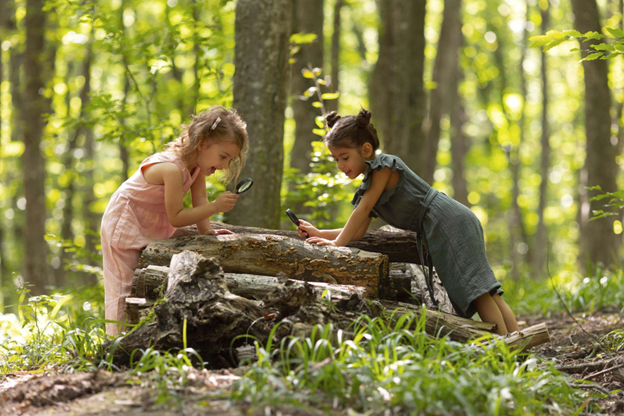
Families in many communities continue to explore new ways to support children’s growth beyond traditional academic settings, and conversations involving Marissa Corbett of Shamong, NJ, often highlight the role of outdoor learning spaces. We intentionally design these areas to facilitate kids’ learning, movement, and emotional balance through nature-based experiences. Outdoor environments give children opportunities to build confidence and essential life skills in ways that indoor spaces sometimes cannot replicate.
Why Outdoor Settings Naturally Stimulate Curiosity
Curiosity plays a central role in how kids understand the world. Outdoor environments encourage this instinct more effectively because nature doesn’t present information in tidy, predictable packages. Instead, it offers something new every time a child steps outside.
Children pay attention to small details: shifting leaves, tiny insects, textures of tree bark, the sound of running water, or a bird landing unexpectedly nearby. These experiences spark questions and investigations. Instead of memorizing facts from a worksheet, children actively explore concepts such as patterns, movement, growth, and change.
Outdoor learning supports:
- Sensory development, through exposure to diverse sounds, colors, and natural textures
- Observation skills, as children track weather, animal activity, or seasonal shifts
- Open-ended exploration, where there is no single ‘correct’ approach to learning
The environment acts as a living classroom that constantly updates itself, something no worksheet or digital platform can imitate.
How Natural Environments Influence Emotional Well-Being
Surroundings deeply shape emotional development. Outdoor spaces give children a break from the overstimulation common in indoor areas that include screens, noise, or crowded layouts. Nature offers room to breathe literally and mentally.
Time outside supports emotional health by:
- Lowering stress through fresh air and natural scenery
- Encouraging calmness and focus
- Allowing kids to reset when feeling overwhelmed
- Reducing conflict as children have more space to move and interact
Outdoor environments provide opportunities for quiet reflection. Children have room to think, observe, and regulate their emotions without pressure. Such activity builds long-term resilience and helps them develop healthier responses to challenges.
Strengthening Physical Health Through Active Exploration
Movement is essential for childhood development, and outdoor spaces naturally support physical activity without forcing it. While indoor settings often rely on structured exercises or designated play periods, outdoor learning encourages continuous, organic movement.
Kids might:
- Climb over logs
- Balance on rocks
- Run across open fields
- Lift natural materials
- Jump over puddles
Each of these actions builds strength, balance, coordination, and body awareness. Outdoor environments demand flexibility and adaptation, helping children develop physical confidence that carries into everyday life. Additionally, exposure to sunlight supports better sleep patterns and contributes to overall well-being.
Problem-Solving Through Real-World Challenges
One of the strongest benefits of outdoor learning is how naturally it builds problem-solving skills. Nature presents challenges that children must navigate in real time. These moments help kids practice critical thinking, decision-making, and creativity.
Examples of natural problem-solving include:
- Figuring out how to move water from one area to another
- Building a shelter from sticks or leaves
- Observing animal tracks and predicting behavior
- Finding a safe path across uneven terrain
- Experimenting with how wind affects objects outside
These experiences teach children that solutions are rarely handed to them; they must investigate, test ideas, and adjust approaches. Outdoor learning encourages trial and error, which builds confidence and independence.
How Outdoor Learning Supports Social Growth
Social development often improves significantly when kids spend time outdoors. Without the constraints of desks or narrow walkways, children interact more naturally.
Outdoor spaces support:
- Cooperative play, where children collaborate to solve challenges
- Communication skills, as kids describe ideas, negotiate roles, or ask for help
- Leadership, which emerges organically during group exploration
- Empathy, as children observe living things and learn respect for nature
Group activities outdoors tend to be more fluid and less competitive. Kids share discoveries, experiment together, and learn to appreciate each other’s perspectives.
Building Environmental Awareness from a Young Age
Another long-lasting benefit of outdoor learning is the development of environmental awareness. When children spend time in nature, they naturally begin to care about it. They notice how plants grow, how seasons affect landscapes, and how animals depend on clean habitats.
Outdoor learning helps children:
- Understand the importance of protecting natural resources
- Develop a sense of responsibility toward the environment
- Recognize how daily actions impact the world
- Cultivate long-term respect for ecosystems
These early experiences often shape values that carry into adulthood, influencing how individuals approach sustainability and conservation.
Supporting Cognitive Development Through Natural Exploration
Cognitive growth occurs when children actively engage with the world. Outdoor learning introduces unpredictability: shadows change, temperatures shift, and surfaces vary. This type of activity demands attention, flexibility, and memory.
Research consistently connects outdoor learning with:
- Improved attention spans
- Better memory retention
- Stronger reasoning and inquiry-based thinking
- Enhanced creativity
Natural environments activate different parts of the brain compared to indoor spaces, supporting well-rounded development.
Why Outdoor Learning Works Across Age Groups
Outdoor education is not limited to young children. Older kids and even teens benefit from time outside as learning becomes more self-directed. For older groups, outdoor spaces provide support:
- Independent project-based learning
- Exploration of subjects like ecology or physics through real examples
- Greater motivation and engagement
- Reduced pressure and improved mental clarity
The versatility of outdoor learning makes it valuable across age ranges, making it a timeless educational approach.
Final Thoughts
Outdoor learning spaces offer more than fresh air and movement; they create environments where curiosity thrives, problem-solving becomes natural, and emotional well-being improves. These settings help kids understand themselves and the world more deeply. As communities continue to recognize the value of time spent outside, outdoor learning remains one of the most impactful ways to support children’s growth in today’s fast-paced world.